
Which Parts of Your New Build Landscaping Should a Specialist complete?

CEO & Garden Designer
Ruth Marshall
Comparing experts’ responses to this question, the consensus was brilliantly summed up by Louisa Pope of leading landscape design studio Marcus Barnett as:
“Everything the Rain Falls On”
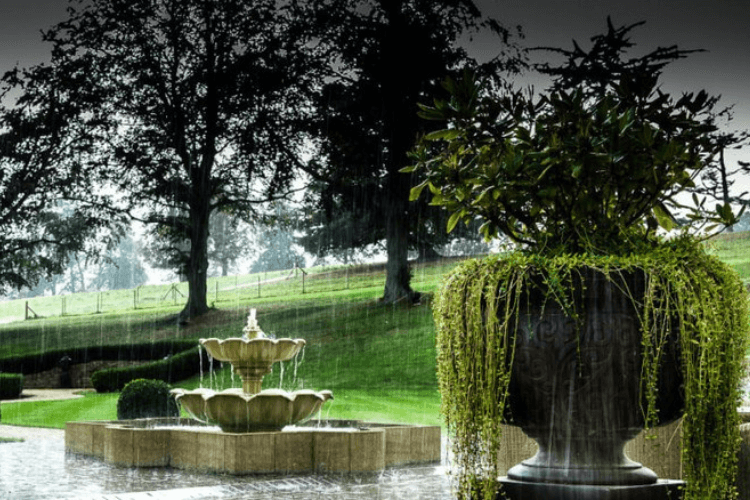
This struck such a chord that I thought it merited a reflection on how projects succeed and where they often go wrong. Whilst as landscapers ourselves I should declare an interest here, this view is echoed by the overwhelming majority of designers and architects we speak to.
Clients may assume it is more efficient for the main contractor or house builder to take on landscaping, after all, they are already on site and can appear to offer good value. However, it is important to understand that there are inherent compromises in this approach. The fact is, on most larger projects, a specialist landscaper will also be on site at some point, so that argument doesn’t hold water- you should be choosing the best team to get the best overall results. Experience says it is much better for a good external landscaping contractor to carry out as much of the external works as possible- the impact on quality, programme and cost can be significant.
My comments are not intended to criticise the excellent builders we work with. Many can complete many landscape tasks very well. However, none, in our experience, would claim to be landscape specialists.
By way of example- even if the Builder is great at paving, in most designs, there will be adjacent large tree planting, irrigation, lighting, drainage, specialist edgings and/or soil preparation and decompaction, which absolutely need to be planned and/or executed in the correct order otherwise the one will damage the other which results in rework or worse.
When is a main contractor suitable for landscaping?
A general building contractor can be the right choice for straightforward, specification-led landscaping, particularly where cost is the overriding priority. In such situations the Main Contractor is likely to be the most economical option.
However, when a client has invested in a Landscape Designer, aesthetics, craftsmanship and detail are almost always central to the brief. The value in the landscape lies not only in what is built, but in how it is built. This is where specialist knowledge and experience becomes critical.
We liken this to asking the on-site carpenter to tile the bathroom simply because he is present. He might be willing and capable of giving it a go, but he is not the quickest, the most efficient or the most experienced person for the job. The result may be acceptable if finish quality is not a priority, but it isn’t going to be exceptional. You might be happy to get what you pay for to some extent, but the knock-on impacts elsewhere may also negate apparent cost advantages.
You don’t know what you don’t know
Main contractors can appear cost-effective because they may not fully appreciate what a high-quality landscape build actually involves. Corners get cut, though not always knowingly. Landscapers use materials and techniques unfamiliar to most builders: Water features and soft landscaping are the most obvious examples, but also sourcing and installing a wider range of stone and loose gravel products, specialist edgings, sculpting landforms, managing land drainage, preparing soils and installing decking systems. These are examples of tasks that benefit from repetition, nuance and lived experience.
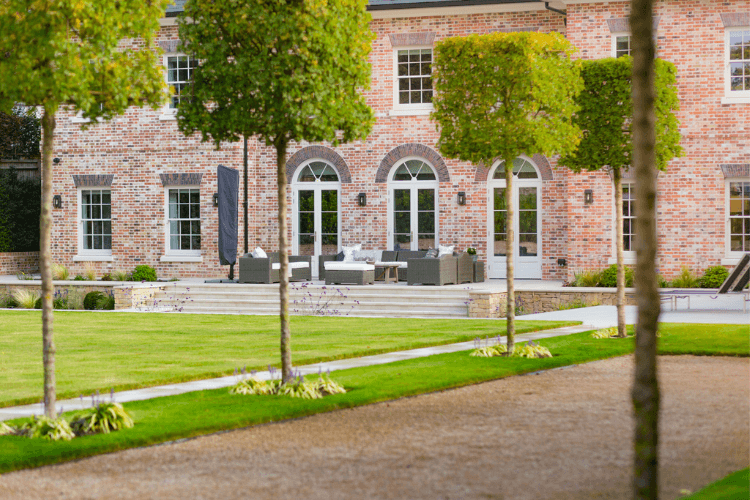
To give a parallel example, our landscape teams could theoretically build a house. They understand plans, most of the trades and techniques, materials and detailing, and would certainly give it their all. But would they deliver it faster, more efficiently and with fewer defects than a specialist house builder? Unlikely. Landscaping is no different. The more complex the project, the truer this is!
Living things behave differently
Landscaping involves living things. Plants do not tolerate being stored behind the skip with no care regime while the site catches up. Delays in the build can mean high failure rates, a missed planting season, storage, or damage to newly laid surfaces- all of these involve cost.

Site teams who are not used to protecting living material may inadvertently cause immediate or long-term harm. Trees used as convenient anchor points for storing materials, waste liquids discharged nearby, or root zones compacted by machinery, can lead to decline or even death months or years later. Because the damage is not always immediate, it is difficult to monitor and even harder to attribute. If one team is in charge of the site this does become simpler (if not perfect), and the risks are lowered.
Preparation is everything
Decorators often say that preparation makes the finish. In landscaping, proper soil preparation, decompaction, formation of falls and sculptural groundworks, and thoughtful land drainage are the equivalent. If these are not done properly, planting and turf may fail, and the landform overall will not look as it should. Unlike a poor paint finish, however, some of the consequences in landscaping are hidden and often do not reveal themselves until long after the contractor has left.
Focus and timing
A main contractor’s priority is, understandably, the house. As the build progresses and pressures mount, landscaping often becomes a secondary priority and can even stop entirely. Furthermore, landscape items that seemed straightforward at tender stage can suddenly become problematic when faced with the reality of the site. By the final stages they may be seen as underpriced, complex and inconvenient. This is when enthusiasm fades and quality suffers.
Pushing a contractor to complete tasks they neither want nor feel equipped to carry out rarely leads to excellence. It can create tension, friction and a second-rate result.
Summary – what does the homeowner really want?
As designers, we often say that “our clients want a garden not a plan”- the installation is critical
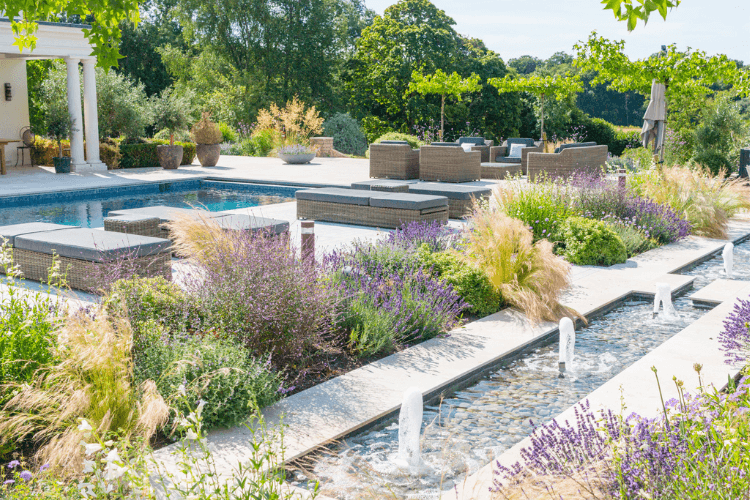
High-end landscape teams and builders are both exceptional in their fields. But few landscapers would claim they should be building houses, and the reverse is in many cases also true.
What clients ultimately want is a landscape team with enough experience to recognise and resolve issues early, to guide and coordinate programmes, and to deliver a level of craftsmanship that lifts the entire project.
A general builder can execute many hard landscaping tasks, but achieving the same finish typically requires significant handholding to avoid mistakes, and it is in the co-ordination and knock on impacts to adjacent areas that things go wrong. It’s not their daily job so this is not surprising.
A recent client who chose the main contractor route reflected afterwards:
“I wish I had asked your team to do everything outside. It ended up costing more because I had to pay you to fix it afterwards.”
A common and successful balance is for the main contractor to handle primary groundworks, base construction and retaining structures; the landscape team handles finishes, steps, paths, drainage, lighting, irrigation, edgings and all soft landscaping. This division typically plays to everyone’s strengths. Co-ordination will still always be required but this split minimises it, as does the sharing of a very detailed construction drawings pack. Having people make things up on the fly is almost guaranteed to result in problems!
Getting the right people in the right places maximises the quality of the landscaping work, its programme and its longevity, using specialists for as much of the external works as is possible is, in the view of unbiased garden designers, the best way to ensure this will happen and that your dream garden fulfils its promise.
CGLA are an award winning team of Garden Designers, Landscape Architects, Landscapers and Garden Maintenance Operatives working in Buckinghamshire, London and the South East, as well as on prestigious design projects across the UK and abroad. We are currently working in Oman, Jersey and France, and welcome enquires for design, landscaping or garden maintenance. Contact us here
