
Designing for Outdoor Living

CEO & Garden Designer
Ruth Marshall
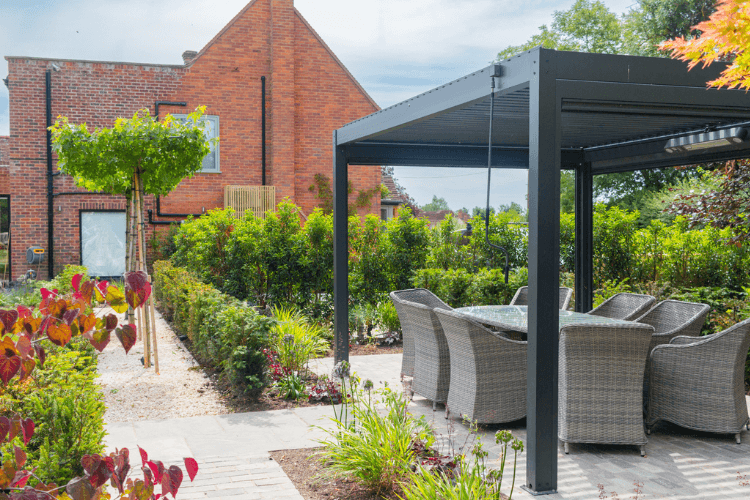
Image CGLA
Creating Spaces You Can Actually Use
Outdoor living is no longer a 'nice to have'. It is central to how we design homes and gardens today. Clients are increasingly investing in generous glazing, open plan layouts and beautifully detailed terraces, all with the intention of connecting inside and out.
And yet, time and again, we visit homes where that connection simply does not work in practice.
A recent project brought this into sharp focus. The house had been thoughtfully renovated, with large glazed doors opening onto the garden. On paper, it was exactly what many clients aspire to. In reality, the rear rooms were almost unusable for large parts of the year. In summer, solar gain made them uncomfortably hot. In winter, the garden felt too exposed to step into for any meaningful length of time.
This is the gap between design intent and lived experience. And it is precisely where outdoor structures, particularly pergolas, come into their own.
The role of shade in good design
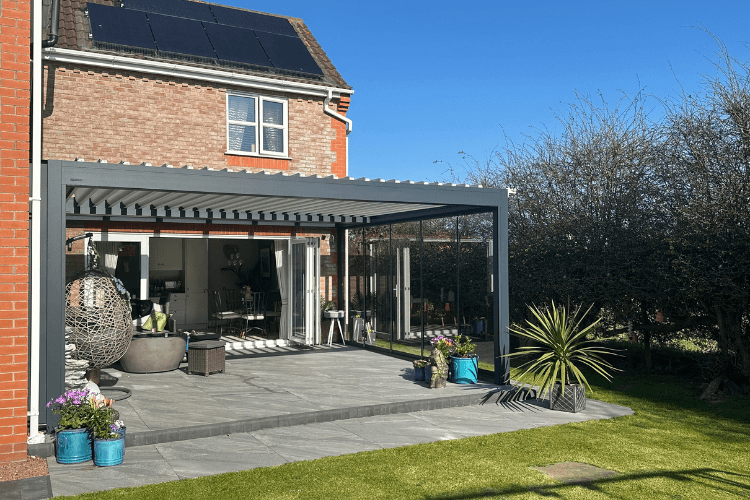
Image Rase Outdoor Living
In the UK, we often underestimate the importance of shade. We design for light, but rarely for controlling it.
A pergola provides a simple but powerful architectural response. Traditionally, pergolas have been used to create shaded walkways or seating areas, offering relief from direct sun while maintaining an open, airy feel.
Contemporary versions take this much further. Adjustable louvred roofs, integrated screens and heating systems allow the space to respond to changing conditions throughout the day and across the seasons.
This ability to manage microclimate is critical. Rather than retreating indoors when it becomes too hot or too exposed, a well-designed pergola allows you to remain outside, comfortably.
Extending the usable footprint of a home
One of the most valuable shifts in thinking is to treat the garden not as separate, but as an extension of the house.
Pergolas help define this transition. Positioned directly off the house, they create a threshold space that mediates between interior and garden. Not fully inside, not fully outside, but something in between.
This is particularly important with modern glazing. Large expanses of glass look beautiful, but without external shading, they can quickly lead to overheating. A pergola positioned adjacent to these openings provides a layer of protection, reducing solar gain while still allowing light to filter through.
The result is not just a more usable garden, but a more comfortable interior as well.
Designing for real life, not just good weather
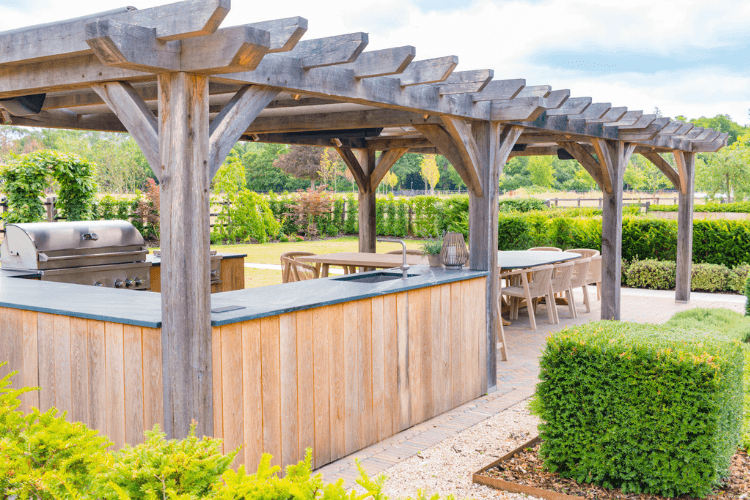
Image CGLA
The reality of British weather means that outdoor living needs to be adaptable.
Pergolas offer a level of flexibility that more temporary solutions simply cannot. Unlike umbrellas or shade sails, they provide a permanent, structured space that feels integrated into the overall design.
More importantly, they can be designed for year-round use. With integrated lighting, heating and weatherproofing, they become an outdoor room in the truest sense.
As our friends at Rase Outdoor Living put it: “We create tailored outdoor solutions that make your space usable and enjoyable all year round.”
This idea of usability is key. A garden should not be something you admire from inside. It should be a space you occupy, whether that is for a quiet morning coffee, family dining or entertaining friends late into the evening.
Creating places to gather
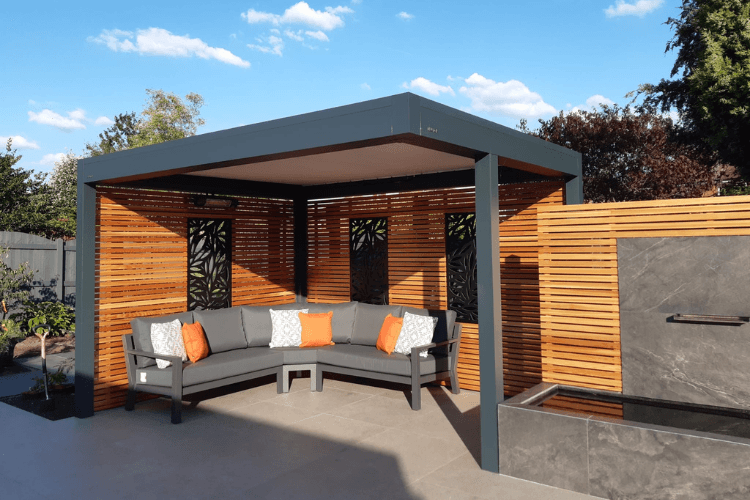
Image Rase Outdoor Living
Beyond comfort, pergolas play an important social role.
They create defined spaces within the garden. Areas that feel intentional and anchored. A place to sit, to dine, to gather.
Without this structure, terraces can often feel exposed or undefined. Furniture is placed, but the space lacks cohesion. A pergola introduces a sense of enclosure without fully closing the space off.
This balance is what makes outdoor living feel natural rather than staged.
Integrating pergolas into the wider landscape
For any outdoor structure to feel successful, it must sit comfortably within the overall design.
A recent conversation with Jonathan Airey – CEO of Rase Outdoor Living, echoed our own experience: Materiality, proportion and alignment are all critical. Pergolas should relate to the architecture of the house, picking up on colours, lines and detailing. Increasingly, aluminium systems are used for their durability and clean aesthetic, as well as their ability to be customised to suit individual schemes.
Equally important is how the pergola connects to the surrounding landscape. It should not feel like an add-on, but part of a cohesive composition that includes planting, paving and circulation.
When done well, it becomes a natural extension of the home.
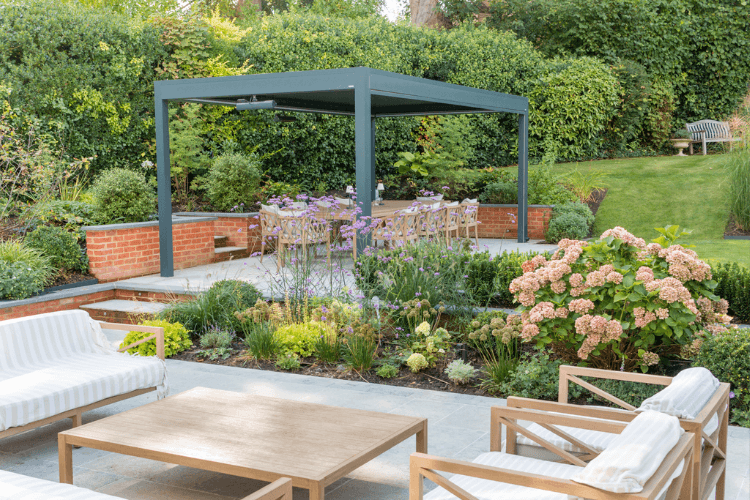
Image CGLA
A considered investment
While pergolas represent an investment, they offer long-term value in how a space is used.
They increase the functional footprint of a property, making outdoor areas more accessible and enjoyable throughout the year. They also enhance the overall appeal of a home, both in terms of lifestyle and potential resale.
More importantly, they address a fundamental issue we see repeatedly. Beautiful spaces that are underused because they have not been designed for comfort.
Designing with intention
Outdoor living is not just about adding furniture to a terrace. It is about creating spaces that respond to climate, orientation and how people actually live.
Pergolas are one of the most effective tools we have to achieve this. They provide shade when it is needed, shelter when the weather turns and structure to support meaningful use.
For us, the starting point is always the same. How do you want to live in your garden?
Once that is understood, the design can follow. And often, a well-considered pergola becomes the element that brings everything together
CGLA are an award winning team of Garden Designers, Landscape Architects, Landscapers and Garden Maintenance Operatives working in Buckinghamshire, London and the South East, as well as on prestigious design projects across the UK and abroad. We are currently working in Oman, Jersey and France, and welcome enquires for design, landscaping or garden maintenance. Contact us here
